The September Skin Reset: Why Autumn Is the Start of “Laser Season” for Resurfacing and Scar Removal
September is often when changes in the skin become easier to notice. As a summer…

After a summer spent in lighter clothing, on holiday or simply outdoors more often, it is quite common to become more aware of your skin.
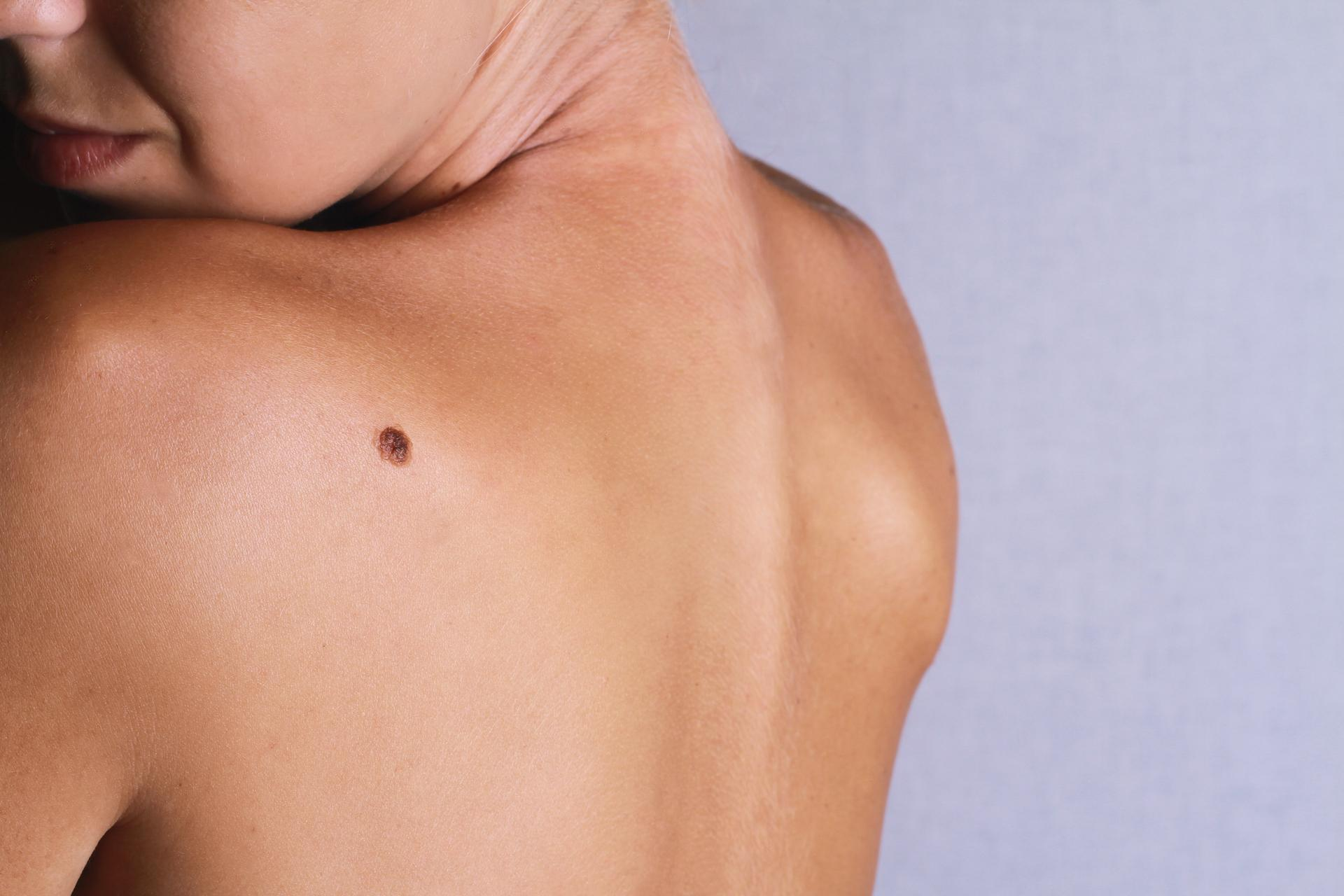
Perhaps you have noticed a mole on your shoulder that looks different from how you remember it. A raised bump may have started catching on clothing. You might have found a small lump that has been there for months but is now bothering you, or noticed a mark on your back because somebody else pointed it out.
Late summer can therefore be a useful prompt to take stock of your skin.
At Cambridge Laser Clinic, patients come to us with everything from unwanted moles and skin tags to cysts, lipomas, warts and other benign skin lesions. Most lumps and bumps are not sinister, but the important first step is establishing what a lesion actually is. Treatment should follow diagnosis, rather than the other way around.
UV exposure is one of the reasons we are encouraged to pay attention to our skin, particularly after periods of increased sun exposure.
That does not mean a mole that looks more noticeable after a holiday is necessarily dangerous. Moles vary considerably in size, shape, colour and appearance, and many changes have benign explanations. What matters is recognising when something deserves medical assessment rather than trying to diagnose it yourself.
Pay particular attention to a mole that is:
A useful principle is to know what is normal for your skin. A mole that looks different from your other moles, or one that is clearly evolving, is worth having assessed.
This is particularly important because a suspicious pigmented lesion should not simply be treated as unwanted pigmentation. At Cambridge Laser Clinic, a medical consultation is required before laser treatment of pigmented lesions so that the diagnosis can be considered and pigmentation associated with malignancy, including melanoma, can be excluded.
Patients understandably use words such as “mole”, “lump” and “skin tag” quite broadly. Clinically, however, apparently similar bumps can represent very different types of skin lesion.
The minor surgery service at Cambridge Laser Clinic includes treatment for benign lesions such as moles, milia, skin tags, seborrhoeic keratoses, sebaceous cysts, lipomas, fibromas, xanthelasma and eyelid cysts, as well as warts and verrucas.
These do not all require the same treatment. A soft skin tag attached by a narrow stalk, for example, is quite different from a deeper lipoma beneath the skin. A seborrhoeic keratosis can have a pigmented, raised appearance that a patient may initially describe as a mole. A cyst has another structure altogether. This is why choosing a procedure before establishing the diagnosis is the wrong way around.
There is an important distinction between an unwanted mole and a suspicious mole.
Most moles are benign. Some people consider removal because a mole catches when shaving, rubs against a bra strap or waistband, becomes irritated by clothing, or simply bothers them cosmetically.
A changing mole requires a different mindset. Changes in colour, thickness, size or shape should be medically assessed, as should a mole that begins to bleed, itch or become painful. The priority at this point is not cosmetic improvement. It is determining whether the lesion is safe and deciding what should happen next.
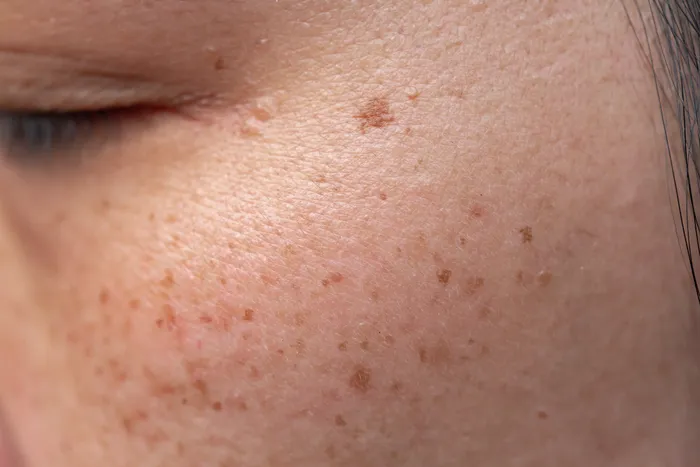
It is also important not to assume that every brown mark is simply sun pigmentation. Freckles, solar lentigines and other benign pigmentation can become particularly noticeable following summer sun exposure, but a pigmented lesion needs to be correctly identified before aesthetic treatment is considered.
For milder, clearly diagnosed pigmentation concerns, laser treatment may subsequently be appropriate. Cambridge Laser Clinic has several laser and light technologies for pigmentation, with the choice depending on factors including the type and depth of pigment, its location and the patient’s skin type. The key word is diagnosed.
Once a mole has been assessed and removal is considered appropriate, the technique depends on the individual lesion. At Cambridge Laser Clinic, we offer both mole excision and mole shave procedures.
With surgical excision, the mole is removed under local anaesthetic and the skin is closed with a suture. This leaves a small scar, which would usually become less conspicuous as it matures.
A shave procedure removes a raised lesion more superficially and can be appropriate for selected moles. It is not simply a “less invasive” alternative that suits everybody. Whether a mole is suitable for shaving depends on its characteristics and the clinical assessment.
This is an important part of minor surgery that can sometimes be overlooked. Removing the lesion is only one consideration. The practitioner also needs to think about its position, depth and size, how the wound will heal and the scar that is likely to replace it.
Minor surgery extends well beyond moles. Some patients have a skin tag that repeatedly catches on jewellery or clothing. Others have a cyst that has gradually become more noticeable, or a lipoma creating a soft lump beneath the skin. Seborrhoeic keratoses can become raised and troublesome, while milia and xanthelasma present very differently again.
Treatment therefore needs to be lesion-specific. Warts provide a good example of why this matters. We offer laser treatment for warts and verrucas, including vascular laser approaches using the 595nm pulsed dye laser or Nd 1064nm laser in selected cases. Laser may also be combined with conventional treatment methods where appropriate.
The practical lesson is simple: “lump removal” is not one treatment. For one patient, minor surgery may be the sensible option. For another, a laser treatment may be more appropriate. Occasionally no treatment is necessary at all.
There is no medically defined “mole removal season”, and a suspicious or concerning lesion should never be left until autumn simply because the timing seems more convenient.
For elective treatment of a lesion that has already been assessed as benign, however, late summer can be a practical point in the year to consider treatment.
As the weather begins to change, treated areas may be easier to keep covered and protected from strong sunlight. This can be useful because fresh scars and recently treated skin need sensible sun protection while healing.
It is also a natural point at which many people notice what has changed over the preceding months. Comparing your skin with older photographs can sometimes help you recognise a mole or lesion that has evolved gradually.
Most importantly, the end of summer creates a useful reminder to stop ignoring something you have been meaning to have checked.
A consultation for a lump, bump or mole should not automatically end with a procedure. If a lesion is benign, symptom-free and does not bother you, there may be no cosmetic reason to remove it. Where treatment is appropriate, the potential benefit also needs to be balanced against factors such as scarring and recovery.
At Cambridge Laser Clinic, minor surgery consultations are used to determine which treatment option is appropriate rather than assuming removal is necessary. That distinction is particularly important with moles. The first question is not “How can we remove this?” It is “What is this, and does it need removing?”
If you have noticed a genuinely new or changing mole, unexplained bleeding, persistent itching or pain, or a lesion that looks distinctly different from the rest of your moles, arrange an appropriate medical assessment rather than waiting for a convenient season.
For benign lumps and bumps, the timing is usually less urgent. You may simply decide that something which has repeatedly caught, become irritated or bothered you throughout summer is finally worth discussing.
Either way, assessment provides clarity. It can establish whether anything needs further investigation and, where the concern is benign, whether minor surgery or another treatment is appropriate.
Any procedure that breaks the skin can leave a scar. With surgical mole excision, a small scar should be expected. Its eventual appearance depends on factors including the size and position of the mole, the surgical technique and your individual healing response.
Recurrence can occur in some circumstances, particularly if mole cells remain after a more superficial removal. Your practitioner can explain how the proposed technique affects this possibility before treatment.
Potentially. We offer removal of a range of benign skin lesions, but whether several can be treated during one procedure depends on their type, number, location and the treatment required.
Photographs can be useful for noticing visible changes over time, particularly on areas that are difficult to remember accurately. They should not replace professional assessment if you are concerned about a lesion.
This depends on the location and extent of the procedure. Movement, stretching, friction and sweating can affect a healing wound, so you will be given aftercare advice appropriate to your procedure.
A mole or lump does not need to be alarming to be worth asking about. Sometimes the most useful outcome of an appointment is simply finding out what a lesion is and whether anything needs to be done.
At Cambridge Laser Clinic we offer consultations for moles and minor surgery in Cambridge. If you have noticed a changing mole, an unwanted benign lesion or a lump or bump that you would like professionally assessed, book a consultation to discuss the appropriate next step.