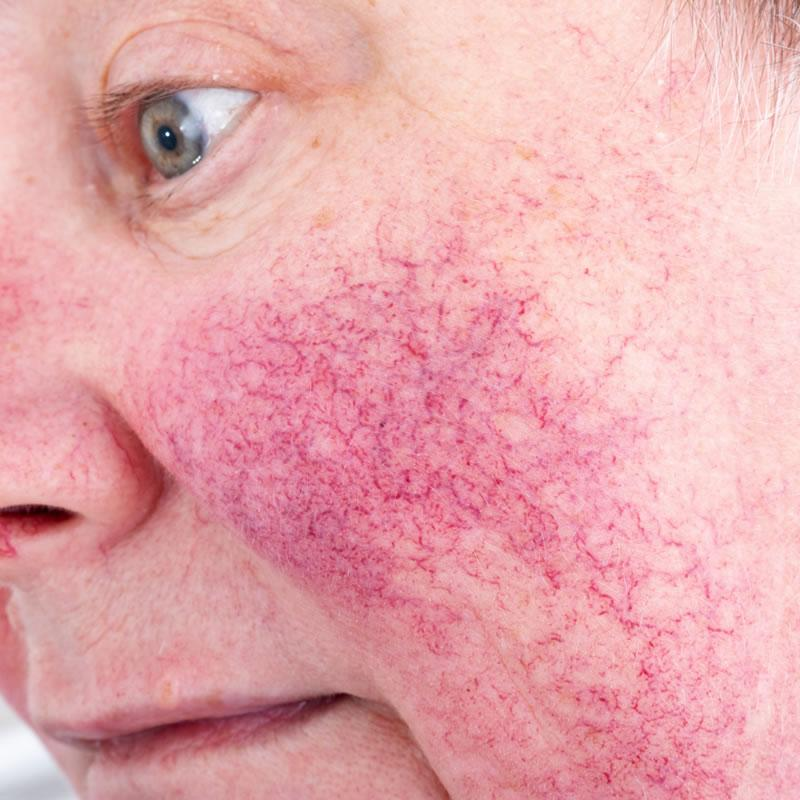
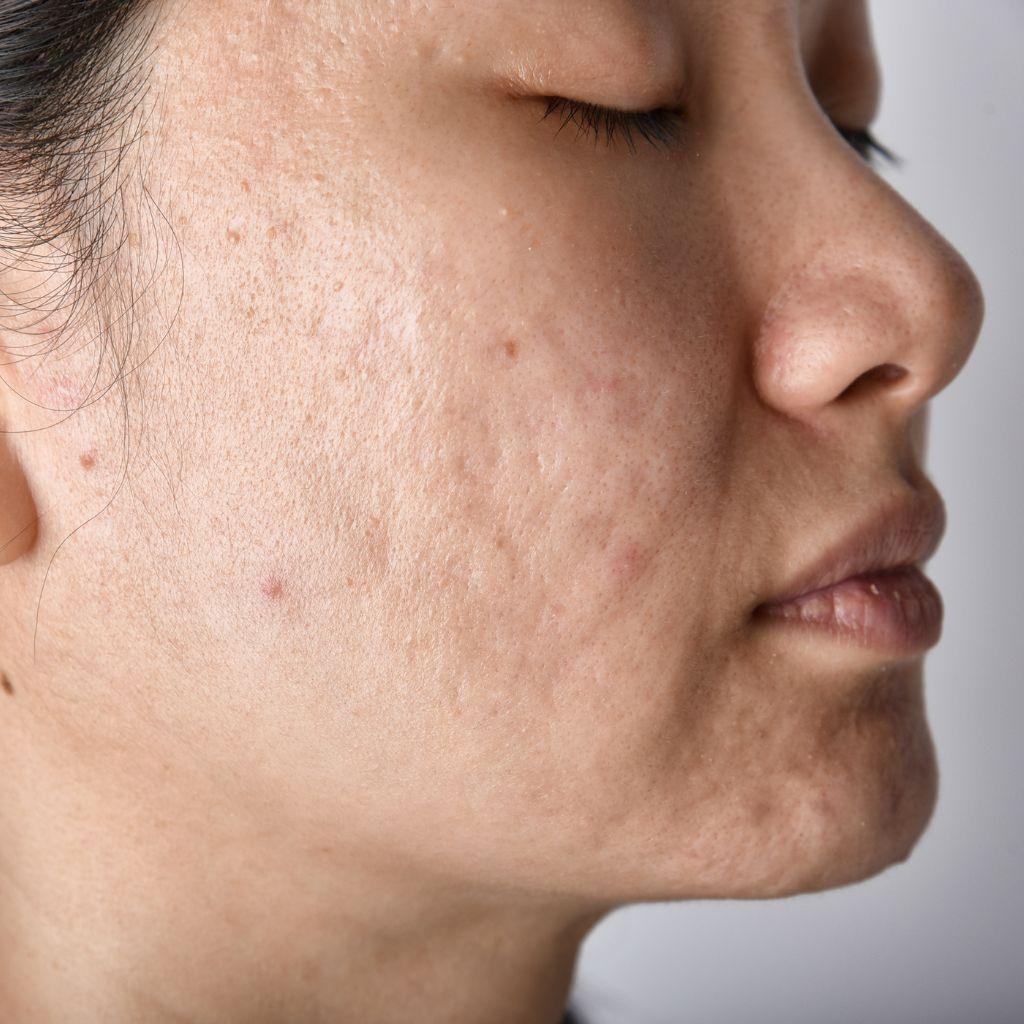
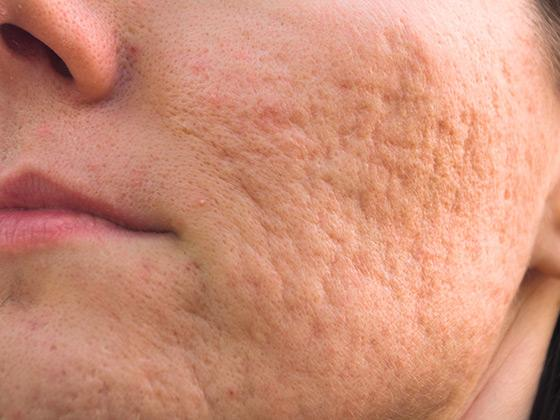
Facial redness can become more noticeable during the colder months. Moving between cold outdoor temperatures…
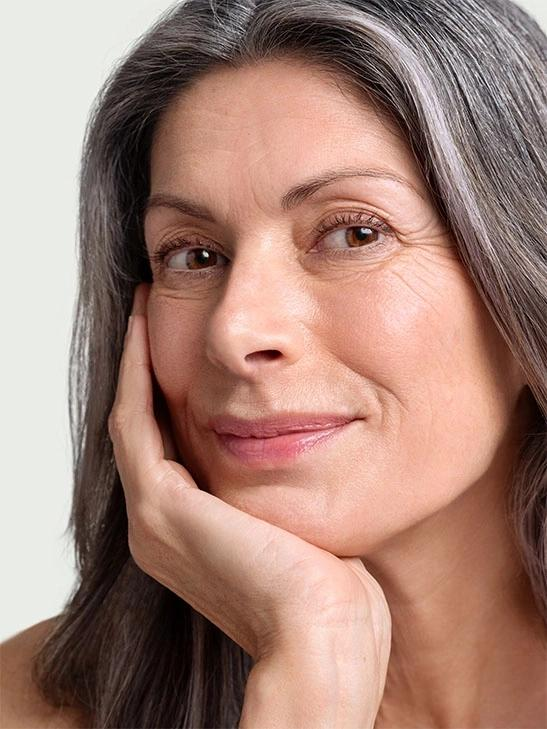
Laser Treatment for Fine Lines and Wrinkles: Which Laser Is Best?
Fine lines around the eyes. Creases around the mouth. A change in skin texture that makes the face look more weathered than it used to. These are often grouped together as “wrinkles”, but they do not necessarily need the same treatment.
This is particularly important when considering laser treatment. There is no single anti-ageing laser that is automatically best for every wrinkle. A fine surface line is very different from a deeper crease, while a line caused by repeated facial movement behaves differently again.
At Cambridge Laser Clinic, we have access to different laser wavelengths and depths of resurfacing. The useful question is therefore not simply “Which is the best laser for wrinkles?” but “Which laser is appropriate for this particular type of wrinkle, skin type and level of ageing?”
Why Do Fine Lines and Wrinkles Develop?
Wrinkles develop through a combination of changes rather than one single ageing process.
Over time, the skin’s collagen support changes and its ability to maintain the same firmness and smoothness gradually reduces. Years of facial movement also create repeated folding in predictable areas, while cumulative sun exposure can contribute to rougher texture, pigmentation and more visible lines.
There are two important types of wrinkles to distinguish.
Dynamic wrinkles appear or become more pronounced when the underlying muscles move. Frown lines and some forehead lines are common examples.
Static wrinkles remain visible when the face is relaxed. These may begin as very fine lines before becoming progressively more established.
This distinction matters because laser treatment primarily works on the skin itself. If muscle movement is the main reason a line is forming, resurfacing the skin may not address the underlying cause.
Where the problem is a static wrinkle, however, improving the damaged surface and encouraging new collagen can make laser treatment particularly useful. You can read more about how Cambridge Laser Clinic approaches fine lines and wrinkles.
Which Laser Is Best for Fine Lines?
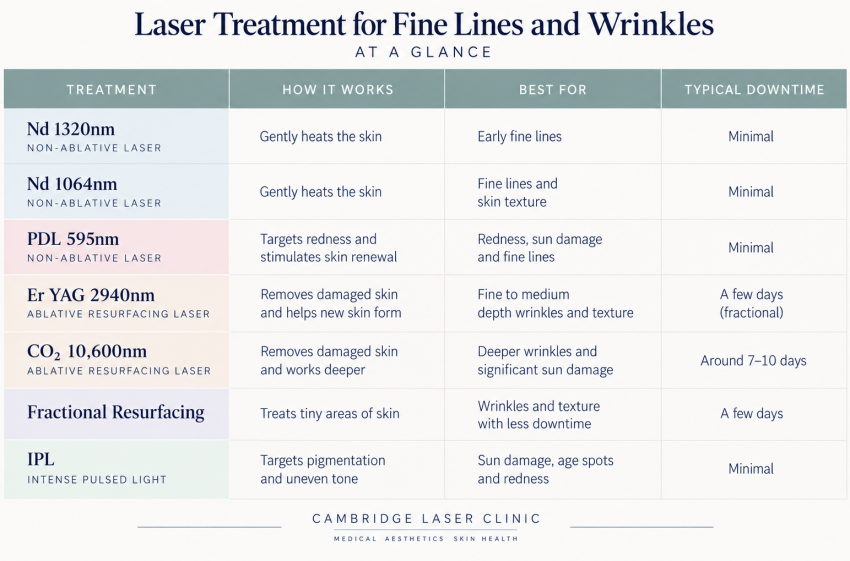
For mild to moderate static wrinkles, at Cambridge Laser Clinic we offer non-ablative laser systems including Nd 1320nm, Nd 1064nm and PDL 595nm.
These lasers work by gently heating the skin without removing its surface. The heat encourages the skin to produce new collagen, which can gradually improve its support, firmness and the appearance of fine lines.
For early signs of ageing, this can be a useful approach because deeper resurfacing is not always necessary. Someone with relatively smooth skin and early fine lines, for example, may need a very different treatment from somebody with deeper wrinkles, rough texture and more noticeable sun damage.
When Is Er YAG 2940nm Laser Used for Wrinkles?
When lines become more established, we may consider laser skin resurfacing with the Er YAG 2940nm laser.
Rather than simply heating the skin, Er YAG removes damaged layers from the surface in a very controlled way. As the skin heals, fresh skin develops and new collagen is produced, helping to improve wrinkles and texture.
Er YAG is particularly useful for superficial to medium-depth resurfacing. It may therefore be considered when wrinkles appear alongside rough texture, sun damage, pigmentation irregularities or other changes in the skin’s surface.
Patients rarely present with a wrinkle in complete isolation. Lines around the mouth, for example, may sit within skin that has also become rougher or more sun damaged. Resurfacing allows us to improve the surrounding skin as well as concentrating on the lines themselves.
When Is CO₂ Laser Used for Deeper Wrinkles?
The CO₂ 10,600nm laser is another resurfacing laser, but it can work deeper into the skin than Er YAG.
It removes damaged skin while also creating heat deeper within the tissue. This encourages the skin to repair and produce new collagen, which is why CO₂ may be considered for more established static wrinkles, particularly when there is also significant sun damage or textural change.
Working deeper usually means more recovery, so CO₂ is not automatically the better option simply because it is a more intensive treatment. We also consider skin type and colour, the condition of the surrounding skin and how much downtime is appropriate.
The aim is to use enough resurfacing to address the wrinkles effectively without treating the skin more aggressively than necessary.
Er vs CO₂ Laser for Wrinkles: What Is the Difference?
Both lasers resurface the skin, but the easiest way to understand the difference is by how deeply they work.
Er YAG 2940nm removes superficial and mid-depth skin layers. This makes it useful for fine lines, wrinkles and changes in skin texture.
CO₂ 10,600nm works deeper into the skin. It may therefore be considered for deeper, more established wrinkles and more significant skin damage.
Skin type also matters. We recommend Er YAG for a wider range of skin colours, while CO₂ resurfacing is generally used in lighter skin types because deeper treatment can carry a greater risk of unwanted changes in pigmentation.
Neither laser is automatically better. The appropriate choice depends on the depth of the wrinkles, the condition of the surrounding skin and how much resurfacing is needed.
What Is Fractional Laser Resurfacing for Wrinkles?
Fractional resurfacing simply means that the laser treats tiny sections of the skin rather than resurfacing the entire area at once. Think of it as creating very small treatment points with healthy, untreated skin left between them. These untreated areas help the skin heal more quickly.
We recommend fractional laser resurfacing for many patients because it can provide significant skin resurfacing with less recovery than treating the entire skin surface.
Traditional resurfacing still has a role, particularly for more severe wrinkles or specific areas of skin damage. The choice depends on how much resurfacing the skin needs and the level of recovery that is appropriate.
Can Laser Be Combined With Other Treatments for Wrinkles?
Yes. Facial ageing can involve static wrinkles, dynamic lines, pigmentation, uneven texture and changes in facial volume, and these do not necessarily respond to the same treatment.
IPL may be considered where superficial photodamage such as pigmentation or redness is also present, while laser resurfacing can address wrinkles and texture.
Where repeated muscle movement is contributing to a line, muscle-relaxing injections may be considered. If loss of volume or facial support is making a fold more prominent, dermal fillers such as Restylane or Juvederm may also form part of the treatment plan.
For milder ageing, one treatment may be sufficient. Where several changes are present, treatments can be combined or staged according to what is actually contributing to the patient’s concerns.
Having Er YAG 2940nm, CO₂ 10,600nm and other laser options available means treatment can be matched to the condition and severity of the skin rather than relying on one laser for every type of wrinkle.
FAQs About Laser Treatment for Fine Lines and Wrinkles
What Age Should You Start Laser Treatment for Wrinkles?
There is no particular age at which somebody needs to start laser treatment. Treatment is based on the changes present in the skin rather than age alone. Some people develop visible photodamage and fine lines earlier than others, while others may not need or want treatment until much later.
Can Laser Be Used for Wrinkles Around the Mouth?
Yes. Laser resurfacing can be considered for static lines around the mouth, but this area needs careful assessment. Repetitive movement, skin quality and changes in facial support can all contribute to their appearance, so laser will not necessarily be the only treatment considered.
Can You Have Laser Treatment Around the Eyes?
Certain laser resurfacing treatments can be used for appropriate lines around the eye area. Treatment close to the eyes requires careful clinical assessment, appropriate technique and eye protection.
Is Autumn or Winter Better for Anti-Ageing Laser Treatment?
Laser resurfacing can be performed at different times of year when clinically appropriate, but autumn and winter can be practical times to plan treatment because strong UV exposure may be easier to limit.
This does not make sun protection any less important. Healing skin needs careful UV protection regardless of the time of year, and holidays or significant outdoor activities should be considered when deciding when to schedule treatment.
How Long Do Laser Resurfacing Results Last?
Laser resurfacing can produce lasting improvements in treated skin, but it does not stop the ageing process. Continued sun exposure, natural changes in collagen and facial movement continue over time.
Protecting the skin from UV exposure and following appropriate skincare can therefore remain important after treatment.
Do You Need More Than One Laser Treatment for Wrinkles?
Not necessarily. The number of treatments depends on the type of laser used, the severity of the wrinkles and the depth of treatment considered appropriate.
A more intensive resurfacing treatment and a milder laser treatment are very different approaches, so treatment frequency cannot be decided simply by the number or depth of wrinkles visible in a photograph.
Considering Laser Treatment for Wrinkles in Cambridge?
If fine lines or wrinkles are starting to bother you, you do not need to know which laser you need before coming to see us. That is what the consultation is for.
At Cambridge Laser Clinic, 7 Brooklands Avenue, Cambridge, we will take the time to look at your skin, understand what you would like to improve and explain the options that may be suitable for you.
Depending on your skin and the type of wrinkles you have, this might involve a milder laser treatment, Er YAG 2940nm resurfacing, deeper CO₂ 10,600nm resurfacing or a combination approach. We can also talk you through the expected results and recovery so you know what treatment would involve before making any decisions.
If you would like to explore your options, you can book an initial consultation with Cambridge Laser Clinic. We will help you find an approach that feels appropriate for your skin, your concerns and the level of treatment you are comfortable with.
Related Posts